No configuration. No rule libraries. Reconciliation that works out of the box.
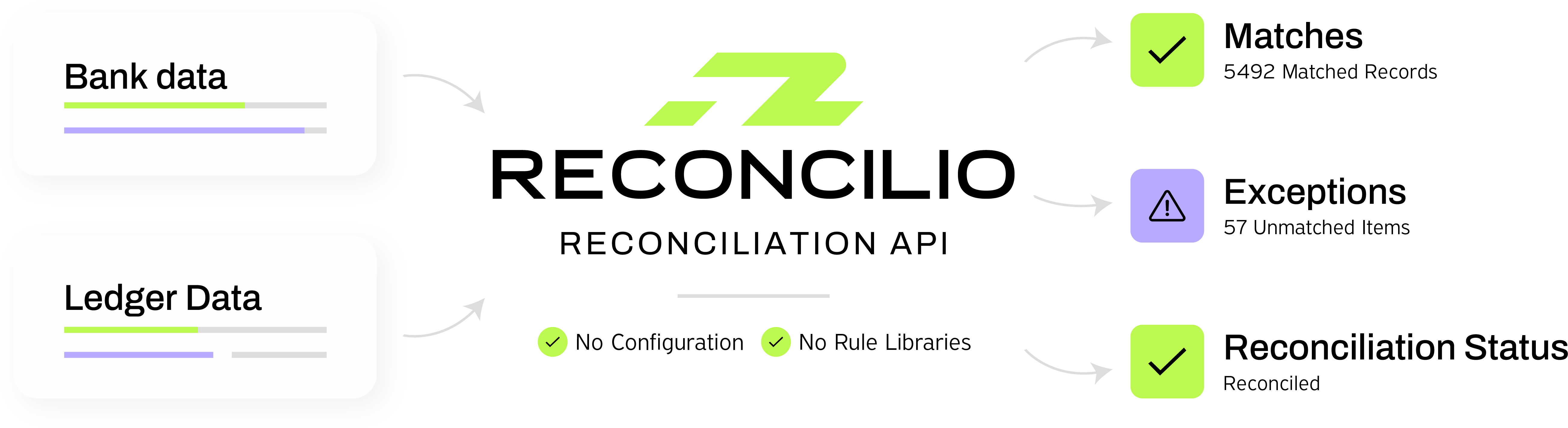
Reconcilio’s Reconciliation API takes your transaction feeds and returns matches and exceptions your platform can act on immediately.

Reconcilio’s Reconciliation API takes your transaction feeds and returns matches and exceptions your platform can act on immediately.


Ease
Start without a setup project. No months of configuration. No rule libraries to build and maintain. It feels tuned from day one.

Strength
Built for real transaction chaos at volume. Inconsistent references, split payments, partials, fees, settlements, and edge cases do not become manual firefighting.

Functionality
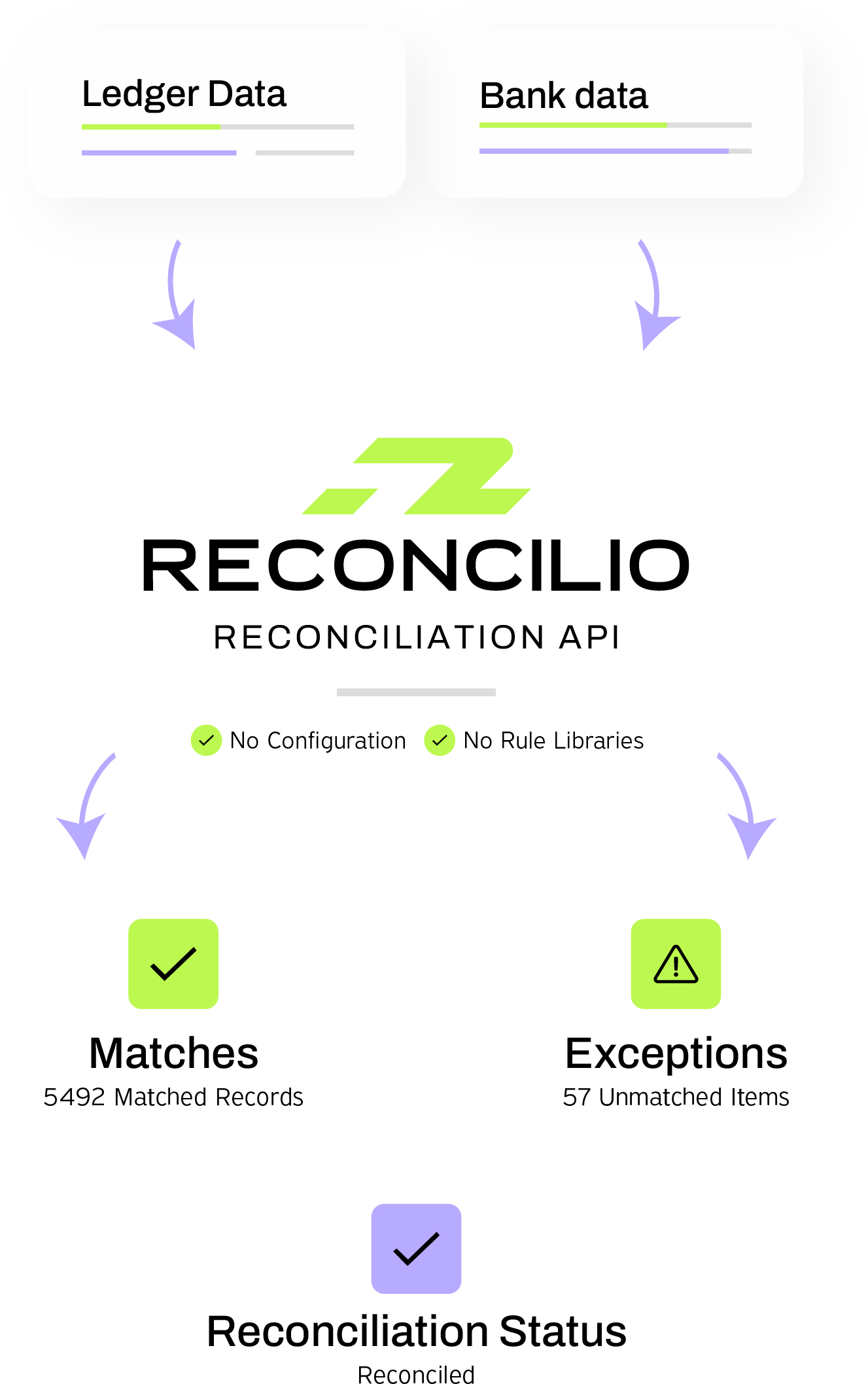
Send transactions in. Get results back. Matched groups, unmatched items, and a clear reconciliation status you can show inside your product or route into your workflows.
You already have transactions across banks, PSP reports, internal ledgers, and operational systems. The hard part is turning that into a reliable view of what reconciles and what needs attention. You provide the transactions. Reconcilio returns:

What matches
What does not match
What needs review
So reconciliation becomes a repeatable system output instead of a spreadsheet exercise.
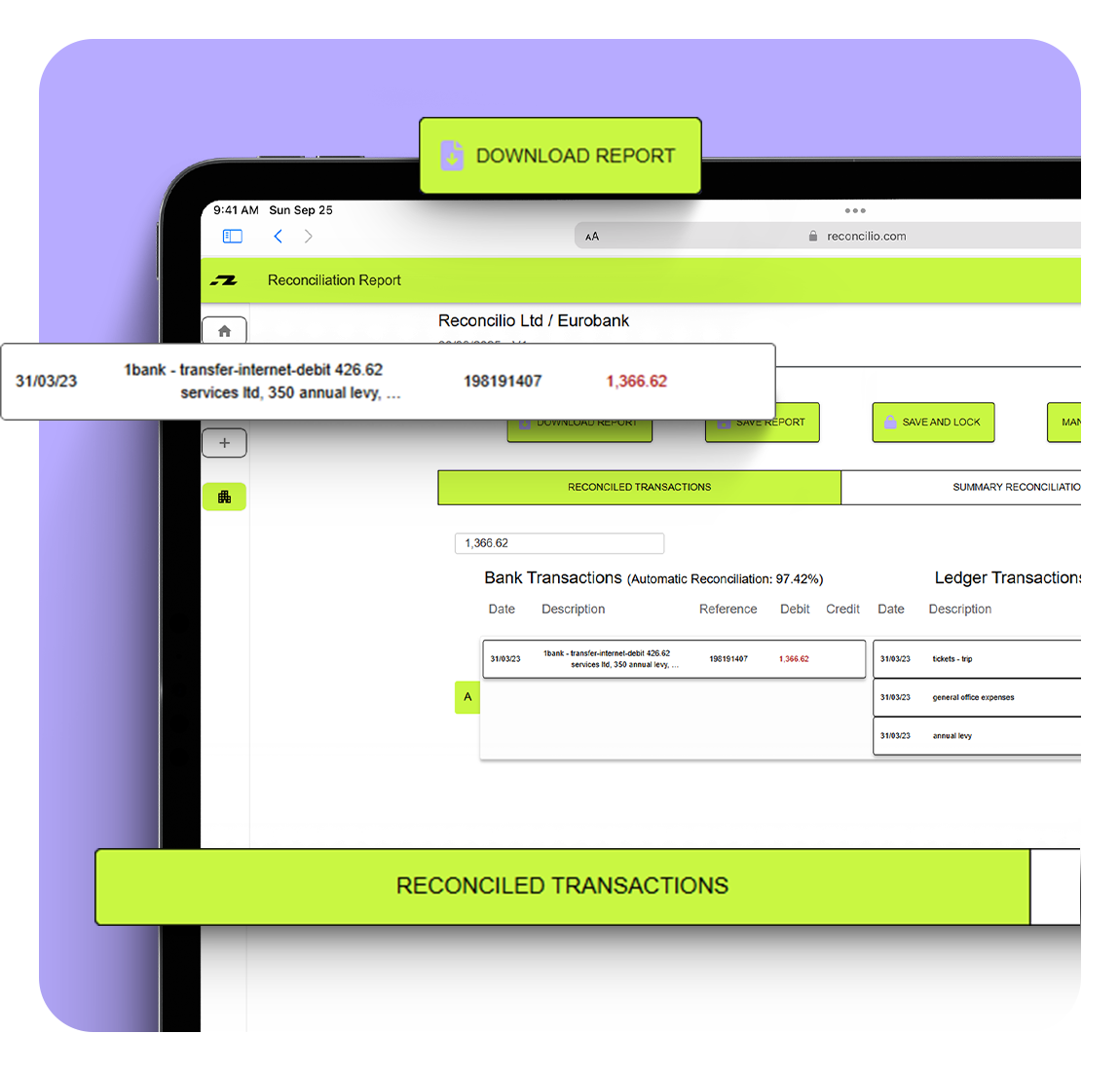

Add a reconciliation engine to an ERP or accounting product without building and maintaining a rules library. Use it for bank vs ledger, settlement vs ledger, and high volume exception handling.
Offer reconciliation as a workflow step inside your automation product. Run two datasets, return matches and exceptions, then route the results to approvals, notifications, exports, or downstream actions.
Use Reconcilio as the common reconciliation layer across multiple systems. Compare bank, PSP, and internal ledgers by running dataset pairs and standardising outputs, even when formats and references differ.

Demo and fit
check

Sample data walkthrough
Pilot on a real
flow
Rollout and scale across entities and sources

If you want reconciliation to become a product capability you can offer to your customers, we will show you what
“working out of the box” looks like on your own data and how it can be packaged as a service line inside your platform.
No sales pitch, no setup stress. Just a faster way to reconcile and reclaim your time.
Life’s too short
to reconcile manually.
Get in Touch


